 Image via Wikipedia
The Hermitage Amsterdam! (as opposed to the Hermitage St Petersburg, Russia). But they are related. In fact the Hermitage Amsterdam is a dependent of its St Petersburg father/mother/guardian (?). Having no permanent collection of its own, it borrows from the St Petersburg stash. And it’s a big stash. The Hermitage St Petersburg has over 3 million items and the largest collection of paintings in the world. It was begot by Catherine the Great (not me, another Catherine the Great) in 1764 with Rembrandts and Rubens and other Flemish and Dutch masterpieces.
But back to Amsterdam. The Hermitage has not been open that long, only since June 2009. Before that the building was for 300 years or so, a 500 bed old ladies home. Revamped, it’s now shiny and modern inside and extremely popular. Lots of tactical manoeuvrings were required to mobilise crowds out of the way so I could get an advantageous viewing position. I have pointy elbows and they are very effective.
Currently exhibiting in the Hermitage Amsterdam is ‘Matisse to Malevich: Pioneers of Modern Art from the Hermitage.’ This encompasses works from the turn of the 20th century until the Great War give or take. The collection is derived from the personal collections of two Russians: Ivan Morozov (1871-1921) and Sergei Shchukin (1854-1936), who, in their time had eyes for cutting-edge art. The works they collected by predominantly French avant-garde artists were considered daring and unpopular in Russia. Shchukin made his important collection accessible to the public free of charge but when the Soviets came to power, the art soon ceased to belong to the private collectors and became property of the state.
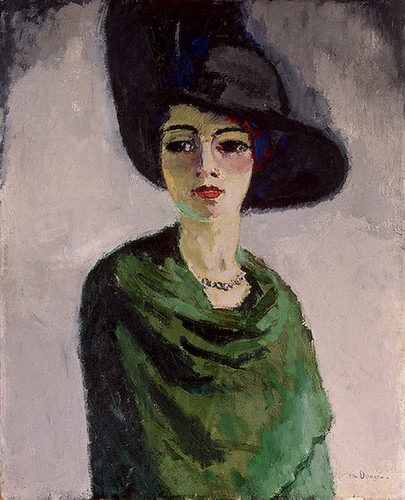
Shchukin was fond of, and friends with Henri Matisse (1869-1954), a leader of Fauvism, along with André Derain (1880 – 1954) and Kees van Dongen (1877 – 1968), whose works are also featured. Fauvism, French for ‘wild beasts’ is characterized by it’s bright colours and simple forms. The Red Room (1908) by Henri Matisse (pictured) is gorgeous and these images are also among my favourites:
Game of bowls (1908), Henri Matisse
Lady in a Black Hat (1908), Kees van Dongen
Portrait of a Man with a Newspaper (1911-14), Andre Derain
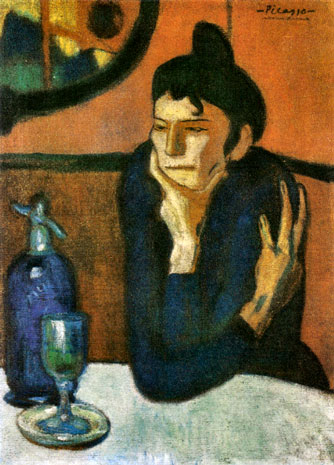
Shchukin was originally ambivalent about Picasso and said that his work made him feel like swallowing broken glass or something (me too). Apparently he got over it realising Picasso was an important artist of the time. This collection included work from Picasso’s blue period - Absinthe Drinker (1901), his Rose period and some of his early cubist works - Dryad (1908) which is plain ugly if you ask me. It’s not the unceremonious spreadeagled and squatting naked misshapen woman’s body that offends but the geometric brown tones – reminds me of 1970’s interior decorating.
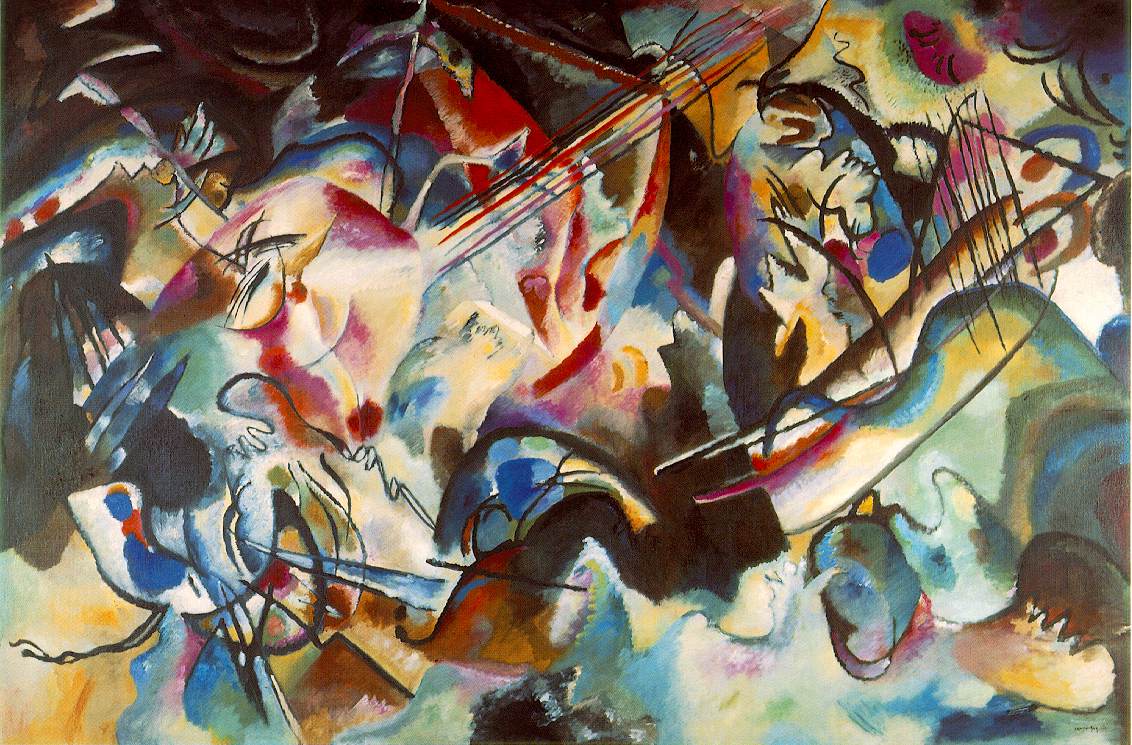
Russian Wassily Kandinsky (1866-1944) was the first modern abstract artist. I’m starting to appreciate him. Kandinsky’s famous Composition VI (1913) works for me and conjures up the symphony that he was inspired by with it’s black squiggly lines and coloured splashes and waves. It helps that the audio guide is playing classical music. In his Composition paintings Kandinsky wanted to create the same emotional power as a musical composition.
The final painting in the exhibition is by another Russian avant-garde artist Kazimir Malevich (1879-1935). Called Black Square (1932). There is nothing to say about it really.
 Image via Wikipedia




No comments:
Post a Comment